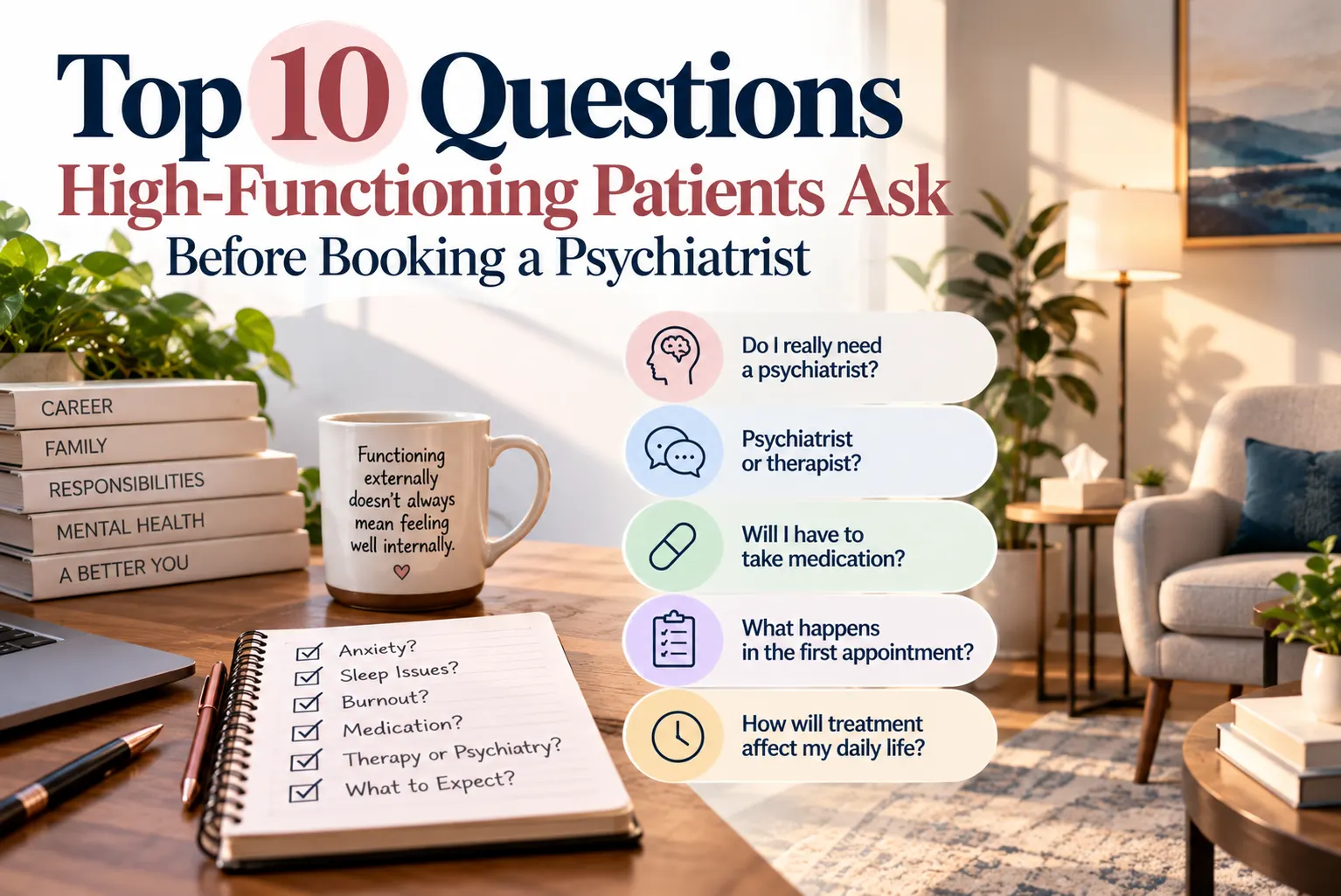
You can excel at work, manage a household, maintain relationships, and meet demanding deadlines while privately struggling with anxiety, emotional exhaustion, or persistent stress. From the outside, everything may appear perfectly fine. Internally, however, maintaining that level of performance can become increasingly difficult.
For many high-achieving adults, deciding to seek psychiatric care raises questions. Is the problem serious enough? Will treatment affect productivity? Does seeing a psychiatrist automatically mean taking medication? And how can you find a provider who understands the pressures of a demanding lifestyle?
These are some of the most common questions high-functioning patients ask before booking a psychiatrist.
High-functioning adults, including executives, entrepreneurs, healthcare professionals, and busy parents, may delay seeking support because they can still manage their responsibilities. However, outward success does not necessarily reflect emotional well-being.
At Christine Bilbrey, MD, PC, personalized psychiatric care considers the individual’s symptoms, medical history, lifestyle, and treatment goals. Understanding what to expect before booking an appointment can help you make an informed decision about your mental health.
1. Do I Need a Psychiatrist If I’m Still Functioning Well?
Yes, you can benefit from a psychiatric evaluation even if you are performing well professionally and managing your daily responsibilities.
High-functioning individuals may experience anxiety, depression, sleep disturbances, or emotional exhaustion without obvious changes in their external performance.
For example, you might consistently meet deadlines while experiencing racing thoughts at night. You may continue caring for your family while feeling overwhelmed, irritable, or emotionally depleted.
Consider speaking with a mental health professional if you notice:
- Persistent worry that is difficult to control
- Difficulty sleeping or switching off after work
- Increasing irritability or emotional exhaustion
- Loss of interest in previously enjoyable activities
- Difficulty concentrating despite maintaining productivity
- Relationships becoming strained because of stress
These experiences do not automatically indicate a psychiatric disorder, but they may warrant professional assessment if they persist or interfere with your quality of life.
You do not have to wait until your career, relationships, or daily functioning deteriorate before seeking support.
2. What Is the Difference Between a Psychiatrist and a Therapist?
A psychiatrist is a medical doctor specializing in mental health. Psychiatrists evaluate psychiatric symptoms, consider medical and psychological factors, diagnose mental health conditions, and prescribe medication when appropriate.
A therapist generally provides psychotherapy or other psychological interventions to help people understand emotions, develop coping strategies, change unhelpful patterns, and navigate personal challenges. Therapists have different professional qualifications and scopes of practice.
The right professional depends on your needs.
A psychiatrist may be a suitable starting point if you are experiencing persistent anxiety, mood changes, significant sleep disturbances, or symptoms that may benefit from medical evaluation.
Psychotherapy may be particularly helpful when you want to explore thought patterns, emotional responses, relationships, or behavioral changes.
Many people benefit from both psychiatric care and psychotherapy, depending on their circumstances.
When choosing a provider, ask about their qualifications, treatment approach, and experience with the concerns you want to address.
3. Does Booking a Psychiatrist Mean I Have to Take Medication?
No. Booking a psychiatric consultation does not automatically mean you must take medication.
A psychiatric evaluation helps clarify your symptoms, medical history, previous treatments, and goals. Based on this information, your psychiatrist can discuss appropriate treatment options.
Depending on your circumstances, treatment may include psychotherapy, medication, lifestyle strategies, or a combination of approaches.
For instance, someone experiencing persistent anxiety may benefit from psychotherapy and strategies for managing stress. Medication may also be appropriate, depending on the clinical assessment and the individual’s preferences.
If medication is recommended, ask about its potential benefits, side effects, alternatives, and how your response will be monitored.
You should have an opportunity to discuss your concerns and participate in treatment decisions.
An integrative approach considers the whole person while maintaining an emphasis on clinically appropriate, evidence-based care. The objective is to identify an approach suited to your needs rather than assume that one treatment works for everyone.
4. What Happens During My First Psychiatric Appointment?
Your first psychiatric appointment generally involves a detailed discussion of your symptoms, personal history, and treatment goals.
Your psychiatrist may ask about when your concerns began, how frequently symptoms occur, and how they affect your work, relationships, sleep, and everyday activities.
The assessment may cover:
- Current symptoms and their duration
- Medical and psychiatric history
- Previous treatments and medications
- Sleep, energy, and concentration
- Family mental health history
- Work-related and personal stress
- Significant life events
- Your expectations and treatment preferences
Depending on your circumstances, your psychiatrist may also explore relevant physical health conditions, medications, or lifestyle factors.
You do not need to arrive with a diagnosis or prepare a perfect explanation of what you are experiencing.
It can help to make a short list of your main concerns, medications, and questions before the appointment.
Christine Bilbrey, MD, PC offers psychiatric care tailored to individual concerns and goals. Before scheduling, contact the practice to confirm the initial consultation format, duration, and availability.
5. Will My Psychiatrist Understand the Pressures of a High-Performing Lifestyle?
High-performing individuals may face unique challenges associated with responsibility, perfectionism, demanding schedules, and the expectation of always being capable.
An executive might feel unable to show uncertainty. A healthcare professional may spend the day supporting others while neglecting personal needs. An entrepreneur may struggle to disconnect from work, even during time off.
Over time, these pressures can contribute to stress, sleep problems, anxiety, and emotional exhaustion.
When choosing a psychiatrist, consider whether the provider understands how professional expectations and personal responsibilities can influence mental health.
You might ask whether they have experience addressing work-related stress, perfectionism, burnout, anxiety, or difficulties establishing boundaries.
A thoughtful psychiatric assessment should consider your individual circumstances rather than assume that professional achievement means you are emotionally well.
At Christine Bilbrey, MD, PC, personalized care provides an opportunity to discuss your concerns, understand your symptoms, and explore treatment options relevant to your goals.
6. Will My Psychiatric Treatment Remain Confidential?
Confidentiality is an important consideration, particularly for professionals who are concerned about privacy.
Psychiatric care is subject to applicable privacy laws and professional confidentiality requirements. However, certain legal and safety-related exceptions may apply.
Before booking, consider asking:
- How are medical records protected?
- Who may access my information?
- What are the limits of confidentiality?
- How is privacy maintained during telehealth appointments?
- Under what circumstances may information be disclosed?
You can also discuss practical steps for attending appointments from a private location, particularly if you work from home or travel frequently.
Private-pay treatment does not automatically eliminate confidentiality concerns or change every applicable legal requirement.
Understanding how your information is handled can help you feel more comfortable discussing sensitive personal matters.
If privacy is a major concern, raise it before your first appointment so you understand the practice’s policies and your rights.
7. What Is Integrative Psychiatry, and Is It Right for Me?
Integrative psychiatry considers mental health within the broader context of a person’s physical health, lifestyle, emotional experiences, and environment.
Alongside conventional psychiatric assessment and evidence-based treatments, an integrative approach may consider sleep, stress management, psychotherapy, physical activity, and other relevant factors.
For high-functioning adults, this broader perspective may be useful when symptoms appear connected to multiple areas of life.
For example, persistent stress may coincide with poor sleep, reduced concentration, and difficulty maintaining healthy routines. An individualized treatment plan can explore these interconnected concerns.
However, integrative psychiatry does not mean that medication or established psychiatric treatments should automatically be avoided. Treatment decisions should be guided by clinical evidence, individual needs, and the potential benefits and risks of available options.
When considering an integrative psychiatrist, ask how the provider incorporates lifestyle and wellness considerations into treatment and how recommendations are evaluated.
Christine Bilbrey, MD, PC offers a personalized approach to psychiatric care that considers the individual’s circumstances and treatment goals.
8. How Much Time Will Psychiatric Treatment Require?
Time is a practical concern for professionals balancing careers, family responsibilities, and other commitments.
The frequency and duration of psychiatric appointments depend on your symptoms, treatment needs, clinical progress, and the type of care recommended.
An initial evaluation may take longer than a follow-up visit because it involves gathering relevant history and understanding your concerns.
Subsequent appointments may focus on monitoring symptoms, reviewing treatment effectiveness, discussing concerns, and making adjustments when appropriate.
Some people need short-term support, while others benefit from longer-term treatment.
Before booking, ask about appointment availability, follow-up scheduling, telehealth options, and what to expect between appointments.
Telehealth may make attending appointments more convenient for eligible patients, particularly those managing demanding schedules.
The goal is not to fit every patient into the same schedule but to establish an appropriate treatment plan that reflects individual clinical needs.
9. How Much Does Private-Pay Psychiatry Cost?
Cost is an important factor when choosing a psychiatric provider.
Private-pay psychiatry generally means paying directly for services rather than receiving in-network care through an insurance plan. Depending on the practice, patients may receive documentation that can be submitted to their insurance company for possible out-of-network reimbursement.
Before scheduling, ask about:
- Initial consultation fees
- Follow-up appointment costs
- Payment and cancellation policies
- Whether superbills are available
- Whether your insurance plan offers out-of-network benefits
A superbill documents relevant information about services provided. You may submit it to your insurer to request reimbursement, but payment is not guaranteed and depends on your plan’s benefits and requirements.
Christine Bilbrey, MD, PC operates on an out-of-network basis and provides detailed superbills for patients to submit for potential reimbursement.
Contact the practice directly for current fees and payment details.
Understanding the financial arrangements beforehand allows you to make a more informed decision about whether the practice fits your needs and budget.
10. How Do I Know If a Psychiatrist Is the Right Fit?
Choosing a psychiatrist involves more than comparing credentials and appointment availability. You should also consider whether the provider’s communication style and treatment approach suit your needs.
During an initial consultation, consider whether the psychiatrist:
- Listens carefully to your concerns
- Explains recommendations clearly
- Discusses treatment options and alternatives
- Respects your preferences and questions
- Considers your medical and personal history
- Establishes clear expectations for follow-up
- Makes you feel comfortable discussing difficult subjects
It is reasonable to ask about experience with concerns such as anxiety, depression, sleep difficulties, mood changes, or work-related stress.
You should feel able to ask questions and discuss your preferences without feeling pressured into a particular treatment decision.
A good therapeutic relationship supports open communication and collaborative care, although finding the right fit can sometimes take time.
Ultimately, look for a qualified professional who can provide appropriate care and work with you toward meaningful treatment goals.
Why Consider Christine Bilbrey, MD, PC?
If you are considering psychiatric care, Christine Bilbrey, MD, PC offers a personalized approach for adults seeking support with their mental health.
Dr. Christine Bilbrey is a board-certified adult psychiatrist whose practice incorporates evidence-based psychiatric care, psychotherapy, and whole-person considerations.
The practice addresses a range of mental health concerns, including anxiety, depression, stress, and related emotional difficulties. Treatment recommendations are tailored to the individual’s history, symptoms, and goals.
For eligible adults seeking private-pay psychiatric care in California, telehealth appointments may provide a convenient way to access care without adding a commute to an already demanding schedule.
Whether you are experiencing persistent worry, emotional exhaustion, mood changes, or difficulty switching off after work, a psychiatric consultation can help you explore what may be happening and whether treatment is appropriate.
You do not have to wait until your responsibilities become unmanageable before prioritizing your mental health.
Visit Christine Bilbrey, MD, PC to learn more about the practice and explore your psychiatric care options.
Final Thoughts
Asking questions before booking a psychiatrist is a practical way to make an informed decision about your mental health.
You may be concerned about medication, confidentiality, costs, appointment schedules, or finding a provider who understands the demands of a high-performing lifestyle. These concerns deserve clear answers.
Although you may continue to meet professional and personal responsibilities, that does not mean you must ignore persistent anxiety, emotional exhaustion, or other changes affecting your well-being.
Seeking professional guidance can help you understand your symptoms, explore appropriate treatment options, and decide what support may be useful.
Christine Bilbrey, MD, PC offers personalized psychiatric care for adults seeking a thoughtful, evidence-based approach to mental health.
Visit www.bilbreypsychiatry.com to learn more about the practice and take an informed first step toward understanding your mental health needs.
FAQs
Why do high-functioning people hesitate to see a psychiatrist?
High-functioning people may worry that their symptoms are not serious enough, fear stigma, have limited time, or feel uncomfortable discussing personal concerns. They may continue meeting responsibilities despite significant emotional distress.
Can I see a psychiatrist if I am successful at work?
Yes. Professional success does not rule out anxiety, depression, or other mental health concerns. A psychiatric evaluation can help clarify your symptoms and determine whether treatment may be appropriate.
Do I have to take medication if I see a psychiatrist?
No. Medication is not automatic. Your psychiatrist can discuss appropriate treatment options based on your symptoms, clinical assessment, preferences, and the potential benefits and risks of available treatments.
What should I ask before booking a psychiatric appointment?
Ask about the psychiatrist’s qualifications, treatment approach, appointment duration, fees, confidentiality policies, telehealth availability, and experience with your particular concerns.
Is psychiatric treatment confidential?
Psychiatric care is subject to applicable privacy laws and professional confidentiality requirements. Certain legal and safety-related exceptions may apply, so ask your provider about record protection and confidentiality policies.
What is integrative psychiatry?
Integrative psychiatry combines conventional psychiatric assessment and evidence-based treatment with appropriate consideration of lifestyle, sleep, stress, physical health, and other factors affecting mental well-being.
Does Christine Bilbrey, MD, PC accept insurance?
The practice operates on an out-of-network basis and provides superbills for patients to submit for possible reimbursement. Reimbursement depends on the patient’s insurance plan and benefits.