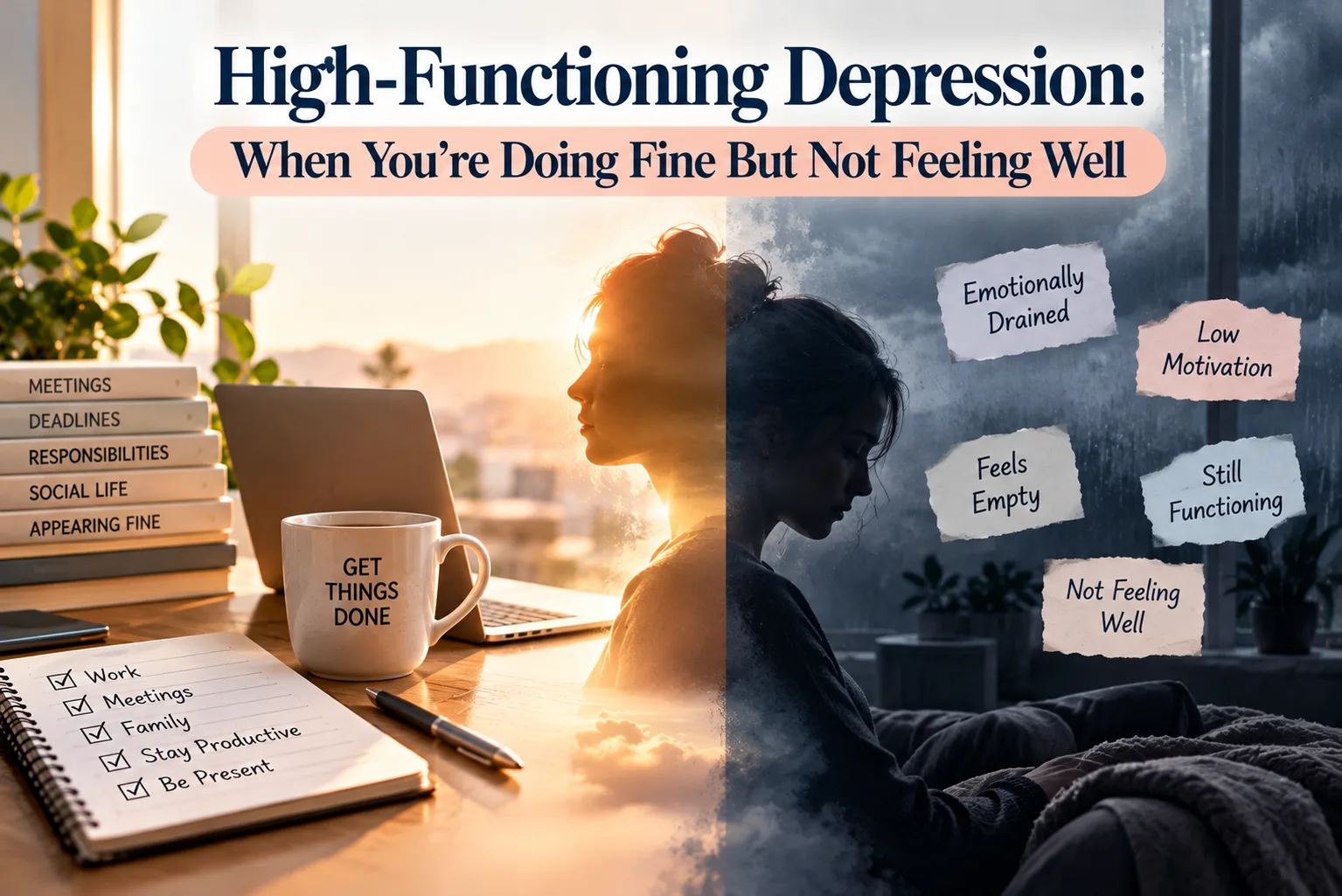
You meet your deadlines, attend meetings, respond to messages, and show up for the people who depend on you. From the outside, your life may look organized and successful. Yet, beneath that routine, you may feel exhausted, emotionally disconnected, unmotivated, or unable to enjoy things that once mattered to you.
If this sounds familiar, you may be experiencing symptoms sometimes described as high-functioning depression.
People who experience depression do not always struggle visibly with everyday responsibilities. Some continue to perform well at work, maintain relationships, and manage family commitments while privately dealing with persistent low mood or emotional distress.
Because their difficulties are not always apparent to others, they may dismiss their symptoms as stress, burnout, or a temporary phase. They may even tell themselves that they have no reason to feel unhappy because everything appears to be going well.
However, outward productivity does not necessarily reflect emotional well-being.
At Christine Bilbrey, MD, PC, individualized psychiatric care and psychotherapy can help people explore persistent emotional difficulties, understand their symptoms, and consider appropriate treatment options.
What Is High-Functioning Depression?
High-functioning depression is an informal term describing people who experience depressive symptoms while continuing to manage many of their everyday responsibilities.
It is not a formal psychiatric diagnosis. A person using this description may meet the criteria for major depressive disorder, persistent depressive disorder, or another condition, but only a qualified clinician can determine an appropriate diagnosis.
For example, someone may consistently perform well at work while struggling to get out of bed on weekends. Another person may maintain an active social life but feel emotionally empty when they are alone.
In these situations, the ability to function does not mean the person is free from distress. It may simply mean they are using considerable effort to maintain their usual routine.
Recognizing this distinction matters because mental health deserves attention even when external responsibilities are still being fulfilled.
1. What Does High-Functioning Depression Feel Like?
High-functioning depression can be difficult to recognize because it does not look the same for everyone. You may not feel sad all the time. Instead, you might notice a persistent sense of emotional heaviness, reduced motivation, or the feeling that you are moving through life on autopilot.
Common Experiences Include:
- Feeling tired even after getting enough sleep.
- Losing interest in hobbies or activities you previously enjoyed.
- Finding ordinary responsibilities more exhausting than they used to be.
- Feeling emotionally numb or disconnected from others.
- Being unusually self-critical or struggling with guilt.
- Having difficulty concentrating or making decisions.
- Experiencing changes in sleep or appetite.
- Feeling hopeless about the future despite appearing successful.
- Becoming irritable or withdrawing from social activities.
- Completing tasks out of obligation rather than genuine interest.
Not everyone experiences all these symptoms, and their presence does not automatically mean someone has depression.
The important consideration is whether these experiences persist, represent a change from your usual self, and affect your quality of life.
For some people, the hardest part is explaining what feels wrong. Nothing may appear obviously broken, yet everyday life feels increasingly difficult to manage.
2. Why Can You Feel Depressed When Everything Seems Fine?
One of the most confusing aspects of depression is that it does not always have an obvious external cause.
You may have a stable career, supportive friends, financial security, or a loving family and still experience depressive symptoms. Having positive circumstances does not make someone immune to mental health difficulties.
Depression can involve a combination of biological, psychological, and environmental factors. These may include a personal or family history of depression, ongoing stress, significant life changes, sleep disruption, medical conditions, or other influences.
Sometimes, the pressure to maintain a successful life can make it harder to recognize distress.
You might tell yourself:
- “I have a good job, so I shouldn’t feel this way.”
- “Other people have bigger problems than I do.”
- “I’m still getting everything done, so I must be fine.”
- “I just need to work harder or become more disciplined.”
These thoughts can encourage you to dismiss your own emotional needs.
But mental health is not a reward for having a difficult life, nor is it a reflection of how grateful or successful you are. You can appreciate what you have and still need support.
3. The Hidden Cost of Always Appearing Fine
Some people become skilled at hiding emotional distress. They maintain their usual routines, smile during conversations, and continue meeting expectations even when they feel depleted.
This may be described as masking or concealing symptoms. It is not a diagnosis in itself, but it can make depression harder for other people—and sometimes the individual—to recognize.
The effort required to appear fine can have consequences.
You may become emotionally exhausted
When much of your energy goes toward meeting expectations, there may be little left for rest, relationships, or activities that bring enjoyment.
You may stop asking for help
You might worry that people will misunderstand you, dismiss your concerns, or assume you are exaggerating because your life looks successful.
You may withdraw privately
You can continue interacting with colleagues and acquaintances while avoiding deeper conversations with the people closest to you.
You may struggle to recognize your own needs
If productivity has become your main measure of well-being, you may ignore emotional signals until they become difficult to manage.
You do not have to reach a breaking point before seeking support. Emotional distress deserves attention even when you are still functioning.
4. High-Functioning Depression vs. Burnout: What’s the Difference?
High-functioning depression and burnout can overlap, but they are not interchangeable.
Burnout is commonly associated with prolonged workplace stress and may involve exhaustion, mental distance from work, and reduced professional effectiveness. Depression can affect a broader range of experiences, including relationships, hobbies, self-worth, sleep, and the ability to enjoy life.
Consider the following comparison:
| Feature | High-Functioning Depression | Burnout |
| Main experience | Depressive symptoms despite maintaining responsibilities | Exhaustion and distress associated with prolonged stress, often at work |
| Mood | Persistent low mood, emptiness, or hopelessness may occur | Frustration, exhaustion, or detachment may be prominent |
| Enjoyment | Interest may decline across different areas of life | Work-related motivation and satisfaction may be especially affected |
| Self-perception | Guilt, worthlessness, or excessive self-criticism may occur | Feelings of ineffectiveness or professional frustration may occur |
| Improvement away from work | Symptoms may continue across settings | Symptoms may improve when work-related pressures decrease, though not always |
This comparison is a general guide, not a diagnostic test. Burnout and depression can occur together, and other conditions may produce similar symptoms.
If you feel persistently low even when you are away from work, or if rest and changes in routine do not improve your emotional state, consider discussing your symptoms with a healthcare professional.
5. Why High Achievers May Overlook Depression
People who place considerable importance on achievement, responsibility, or independence may find it especially difficult to acknowledge emotional struggles.
This does not mean high achievement causes depression. Rather, certain habits and expectations can make symptoms easier to overlook.
- Perfectionism: You may feel that you must perform well regardless of how you feel.
- Overcommitment: Staying busy can leave little time to notice or process your emotions.
- Self-criticism: You may interpret low motivation as laziness or weakness instead of recognizing it as a possible symptom.
- Fear of judgment: You might worry that acknowledging a mental health concern will change how colleagues, friends, or family members see you.
- Reliance on productivity: You may assume that completing your responsibilities means you are doing well emotionally.
Over time, these patterns can make it harder to recognize when you need support.
It is possible to be competent, dependable, and ambitious while also experiencing depression. You do not need to abandon your goals to take your mental health seriously.
6. When Should You Consider Professional Help?
You do not need to wait until your work performance declines or your daily routine becomes unmanageable before seeking help.
Consider speaking with a mental health professional if you notice:
- Low mood or emotional emptiness that persists.
- A loss of interest in activities you previously enjoyed.
- Ongoing fatigue or changes in sleep and appetite.
- Difficulty concentrating or making decisions.
- Feelings of guilt, worthlessness, or hopelessness.
- Increasing social withdrawal.
- A growing sense that everyday life requires more effort than it used to.
- Symptoms that affect your relationships or quality of life.
Depression is commonly assessed by looking at the pattern, duration, severity, and impact of symptoms. Major depressive disorder typically involves symptoms present for at least two weeks, although you should seek help sooner if your symptoms are severe or concerning.
A clinician can assess your experiences, consider other possible explanations, and recommend appropriate care.
If you experience thoughts of suicide or self-harm, seek immediate support. In the United States, call or text 988 for crisis support. If you are in immediate danger, call 911 or go to the nearest emergency department.
7. How Is High-Functioning Depression Treated?
Because high-functioning depression is not a formal diagnosis, treatment is based on the underlying condition, symptoms, and individual circumstances.
The good news is that effective treatments are available for depressive disorders. Options may include psychotherapy, medication, or a combination of approaches.
Psychotherapy
Psychotherapy can help you recognize unhelpful thought patterns, understand emotional experiences, and develop healthier ways of responding to stress.
Cognitive behavioral therapy (CBT), for example, can help address persistent self-criticism, negative thinking, and behaviors that reinforce low mood.
Therapy can also provide a space to explore perfectionism, emotional avoidance, work-related pressure, or the difficulty of asking for support.
Psychiatric evaluation and medication
A psychiatric evaluation can help determine whether your symptoms are consistent with a depressive disorder or another mental health concern.
When appropriate, a psychiatrist may discuss medication options, including antidepressants, and explain their potential benefits, risks, and side effects.
Medication is not necessary for everyone. Treatment decisions depend on symptom severity, medical history, personal preferences, previous treatment experiences, and other relevant factors.
Lifestyle and practical support
Regular sleep, physical activity, meaningful social connections, and manageable routines can support mental well-being.
However, lifestyle changes should complement professional care rather than replace it when symptoms are persistent or significant.
Recovery is not about becoming more productive. It is about improving your emotional well-being and helping you participate in life with less distress.
8. Small Steps You Can Take to Support Your Mental Health
While professional treatment may be appropriate, small everyday changes can also help you pay closer attention to your emotional needs.
Check in with yourself honestly. Ask how you feel rather than evaluating your day only by what you accomplished.
Make room for restorative activities. Choose activities that feel meaningful or enjoyable without turning them into another performance goal.
Stay connected. Consider sharing your experience with someone you trust rather than feeling you must manage everything alone.
Notice changes in your habits. Pay attention to persistent shifts in sleep, appetite, motivation, or social engagement.
Set realistic expectations. You do not have to meet every expectation perfectly to be valuable or deserving of care.
Consider professional support. If your symptoms persist or interfere with your life, arrange an appointment with a qualified mental health professional.
These steps are not a substitute for assessment or treatment, but they can help you recognize what you need and take the next step.
9. How Christine Bilbrey, MD, PC Can Help
If you appear to be managing life successfully but privately struggle with low mood, exhaustion, or emotional disconnection, you deserve to have those experiences taken seriously.
Christine Bilbrey, MD, PC provides psychiatric care and psychotherapy for individuals seeking support with emotional and mental health concerns.
A personalized evaluation can help you explore your symptoms, understand possible contributing factors, and consider treatment options suited to your circumstances.
Whether you are experiencing persistent low mood, difficulty managing stress, or a sense that you are no longer enjoying life as you once did, professional support can help you understand what is happening.
You do not have to wait for your work, relationships, or daily responsibilities to fall apart before seeking help.
Visit Christine Bilbrey, MD, PC to learn more about the practice and its psychiatric care and therapy services.
Final Thoughts
High-functioning depression can be difficult to recognize because the person experiencing it may continue meeting expectations while struggling privately.
You may still be productive, dependable, and successful, yet feel exhausted, disconnected, or unable to enjoy the life you have built. Those experiences deserve attention, even when other people cannot see what you are going through.
High-functioning depression is not a formal diagnosis, and appearing successful does not rule out a depressive disorder. Recognizing persistent symptoms and seeking appropriate professional support can be an important step toward feeling better.
If you have been telling yourself that you should be fine because everything looks fine, consider giving your emotional well-being the same attention you give your responsibilities.
Explore personalized psychiatric care and psychotherapy with Christine Bilbrey, MD, PC.
FAQs
Is high-functioning depression a real diagnosis?
High-functioning depression is an informal term, not a formal psychiatric diagnosis. It describes people who experience depressive symptoms while continuing to manage many daily responsibilities. A clinician can assess whether an underlying depressive disorder or another condition is present.
Can you have depression and still be successful?
Yes. People experiencing depression may continue to work, maintain relationships, and fulfill responsibilities. Outward success does not necessarily reflect emotional well-being.
What are the most common signs of high-functioning depression?
Possible signs include persistent low mood, reduced interest in activities, fatigue, changes in sleep or appetite, difficulty concentrating, irritability, and negative thoughts about oneself. Symptoms vary, and professional assessment is needed to determine their significance.
Is high-functioning depression the same as persistent depressive disorder?
No. High-functioning depression is an informal description, while persistent depressive disorder is a recognized diagnosis involving a chronically depressed mood over an extended period. A clinician can determine which diagnosis, if any, fits an individual’s symptoms.
Can high-functioning depression get worse?
Depressive symptoms can worsen over time, although the course varies. Maintaining daily responsibilities does not guarantee that symptoms will remain manageable. Seeking support early may help address symptoms before they become more disruptive.
Can high-functioning depression be treated without medication?
Depending on the underlying condition and its severity, psychotherapy and other supportive approaches may be appropriate. Medication may also be recommended in some circumstances. Treatment decisions should be made with a qualified healthcare professional.
When should I see a psychiatrist for high-functioning depression?
Consider a psychiatric evaluation if low mood, loss of interest, fatigue, or other symptoms persist, worsen, or affect your quality of life. You do not need to wait until you can no longer fulfill your responsibilities to seek help.