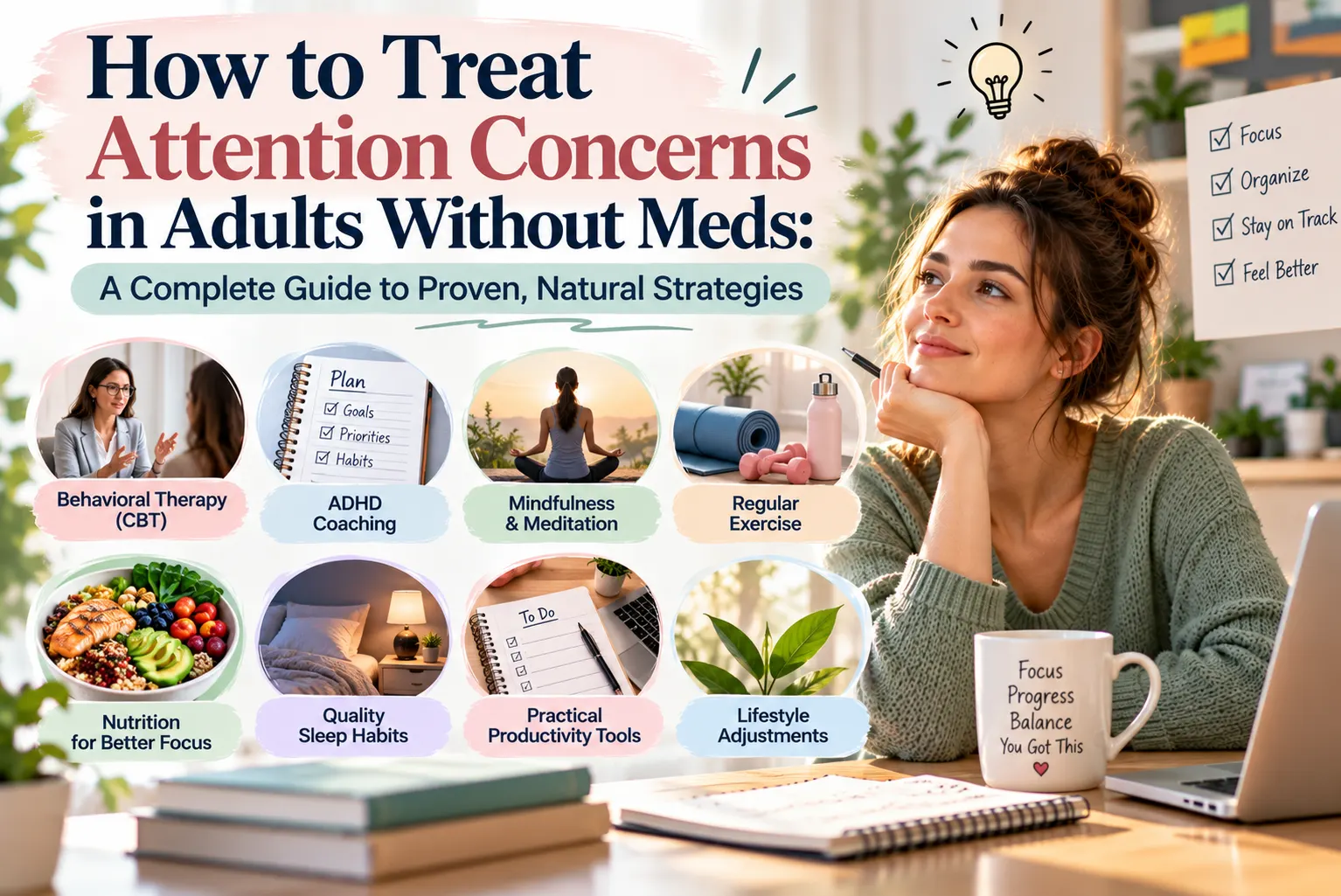
Adult attention issues are often misunderstood. Many people assume medication is the only effective treatment—but that’s far from true. Accurately diagnosing attention issues in adults is complex and multiple medical etiologies should be ruled out as well as improvement of lifestyle factors before a diagnosis is accurately made of an attentional disorder. While medication can be helpful for many individuals with severe and persistent attention problems that are longstanding, a large number of adults prefer non-medication approaches, either because of side effects, medical conditions, or simply a personal desire to explore natural methods first.
If you’ve searched for how to treat attention in adults without meds, you’re not alone. Across the U.S., many adults want solutions that help them stay organized, focused, calm, and productive—without relying on stimulant or non-stimulant medications.
At Christine Bilbrey, MD, PC, we provide holistic, integrative, and evidence-based treatment of attention concerns, helping adults build practical systems and habits that improve daily life. This guide breaks down the most effective non-medication strategies you can start using right away.
Understanding Attention Concerns in Adults
ADHD is a neurodevelopmental condition that affects executive functioning—the mental processes responsible for:
- Planning
- Time management
- Sustaining attention
- Organizing tasks
- Regulating emotions
- Following through on commitments
Adults with ADHD often describe feeling:
- Overwhelmed
- Distracted
- Forgetful
- Impulsive
- Easily frustrated
- Disorganized
Medication can help with these symptoms, but behavioral and lifestyle strategies are equally important—and for some adults, they can be transformative on their own.
1. Behavioral Therapy (Cognitive Behavioral Therapy for ADHD)
Cognitive Behavioral Therapy for ADHD is one of the most research-supported ways to manage symptoms without medication.
What CBT for ADHD Helps With
- Reducing procrastination
- Improving time management
- Breaking tasks into manageable steps
- Challenging negative self-talk
- Strengthening focus and follow-through
- Managing emotional reactivity
CBT works by identifying ineffective habits or thought patterns, then replacing them with structured systems that support your goals.
Why it works: ADHD is a disorder of execution, not intelligence. CBT helps translate your intentions into consistent actions.
2. ADHD Coaching: Practical, Hands-On Support for Daily Life
ADHD coaching is different from therapy. It is more action-oriented, focusing specifically on:
- Organization and routines
- Accountability
- Work or academic productivity
- Creating sustainable systems
- Goal-setting and follow-through
An ADHD coach helps adults build the structure their brain struggles to create.
Examples of Coaching Tools
- Personalized scheduling systems
- Task-management frameworks
- Accountability check-ins
- Daily routine mapping
- Priority sorting
- Habit stacking
This approach is especially effective for people who know what they need to do but struggle to start or finish tasks.
3. Mindfulness & Meditation: Training the ADHD Brain to Slow Down
Mindfulness is scientifically proven to strengthen areas of the brain responsible for attention regulation.
Benefits for ADHD Adults
- Improved ability to stay present
- Reduced impulsivity
- Better emotional control
- Less anxiety and overwhelm
- Greater awareness of distractibility
Mindfulness does not require long sessions—even 5 minutes a day can help rewire attention networks.
Best Mindfulness Exercises for ADHD
- Breath-based meditation
- Body scans
- Mindful walking
- Counting breaths
- Guided meditation apps
When practiced regularly, mindfulness increases gray matter in the prefrontal cortex—exactly where ADHD brains need it most.
4. Exercise: One of the Most Powerful Natural ADHD Treatments
Physical activity boosts dopamine, norepinephrine, and serotonin—the same neurotransmitters targeted by ADHD medications.
Best Types of Exercise for ADHD
- High-intensity interval training (HIIT)
- Running, cycling, or swimming
- Dance or martial arts
- Strength training
- Yoga (for calm + focus)
Proven Benefits Include
- Sharper focus
- Reduced hyperactivity or restlessness
- Better sleep
- Improved executive functioning
- Emotional regulation
Aim for 30 minutes a day, even if broken into smaller chunks.
5. Nutrition for ADHD: Feeding the Brain for Better Focus
While diet alone cannot “cure” ADHD, certain nutritional patterns significantly improve cognitive functioning.
Key Nutrients that Support Attention
- Omega-3 fatty acids (fish, walnuts, chia seeds)
- High-protein foods (eggs, beans, chicken)
- Complex carbohydrates (whole grains, sweet potatoes)
- Iron, zinc, magnesium
Foods that May Worsen ADHD Symptoms
- Artificial food dyes
- Excess sugar
- Caffeine (in some individuals)
- Highly processed foods
Many adults notice clearer thinking and better focus after optimizing their diet.
6. Sleep Optimization: The Hidden ADHD Treatment Most Adults Ignore
ADHD and sleep problems often reinforce each other.
Adults with ADHD commonly struggle with:
- Staying up too late
- Racing thoughts
- Poor sleep quality
- Inconsistent wake times
Poor Sleep Intensifies
- Distractibility
- Emotional sensitivity
- Memory lapses
- Impulsivity
Improving Sleep Hygiene Supports ADHD Treatment By
- Strengthening attention
- Improving mood stability
- Supporting motivation
- Enhancing executive functioning
A sleep-focused plan may include:
- Consistent bed/wake times
- Limiting screens before bed
- Using calming routines
- Managing nighttime overstimulation
7. Creating Structure & Environment Systems for ADHD
ADHD brains thrive when the environment provides cues and reduces friction.
Most Helpful Tools Include
- Digital calendars (Google Calendar)
- Task management apps (Todoist, Notion, Trello)
- Visual schedules
- Color-coded organization
- Clear workspaces
- Daily checklists
- Habit trackers
Environmental Design is Often the Turning Point
Example: If starting tasks is difficult, placing materials in visible, easy-to-reach locations can dramatically increase follow-through.
8. Body Doubling: A Highly Effective ADHD Productivity Hack
Body doubling involves working alongside someone else—physically or virtually.
Why It Works
- Reduces avoidance
- Creates accountability
- Helps initiate difficult tasks
- Increases sustained attention
Virtual body-doubling groups have become extremely popular for adults with ADHD.
9. Treating Emotional Dysregulation Naturally
ADHD isn’t just about attention—it also affects emotional processing.
Without Medication, Emotional Regulation Improves Through
- Therapy
- Mindfulness
- Journaling
- Nervous system regulation techniques
- Regular exercise
- Reducing sensory overload
Learning to recognize emotional triggers can prevent spirals of frustration or overwhelm.
10. Holistic & Integrative Approaches for ADHD
At Christine Bilbrey, MD, PC, many adult patients benefit from a whole-person approach that includes:
- Stress-reduction techniques
- Breathwork
- Somatic (body-based) therapies
- Biofeedback
- Light therapy
- Neurofeedback
- Lifestyle coaching
These methods target the root systems that influence attention, mood, and executive functioning.
When to Seek Professional Support
If ADHD symptoms are impacting job performance, relationships, emotional health, or daily functioning, professional guidance can help.
Adults often come to our clinic when they feel:
- Overwhelmed
- Burned out
- Disorganized
- Emotionally exhausted
- Unable to stay consistent
A personalized ADHD treatment plan can integrate non-medication strategies—and, if desired, discuss medication options later.
Why Work With Christine Bilbrey, MD, PC
Our clinic specializes in:
- Holistic psychiatry
- ADHD assessment & treatment
- Non-medication ADHD strategies
- Modern, integrative mental health care
- Evidence-based, personalized plans
We take a compassionate, collaborative approach, helping adults understand their brains and build systems that truly work.
Ready to Take the Next Step?
If you’re exploring how to treat attention concerns including ADHD in adults without meds, you deserve guidance tailored to your brain—not generic advice.
At Christine Bilbrey, MD, PC, we help adults create sustainable systems for focus, productivity, and emotional balance—naturally and effectively.
Learn more or book an appointment today!
FAQs
1. Can adults with ADHD be treated without medication?
Yes. Many adults see major improvements with behavioral therapy, coaching, mindfulness, exercise, structured routines, and holistic care—even without medication.
2. What is the most effective non-medication treatment for adult ADHD?
CBT for ADHD, ADHD coaching, and lifestyle restructuring (especially exercise and sleep regulation) have the strongest evidence.
3. Can diet help inattention symptoms in adults?
A balanced diet rich in Omega-3s, protein, and whole foods can support focus and mood. While diet doesn’t “cure” attention problems, it is an important part of holistic treatment.
4. How do I know if I need professional help for attention concerns?
If symptoms are affecting work, relationships, or emotional health, an evaluation with a clinician can provide clarity and a personalized treatment plan.